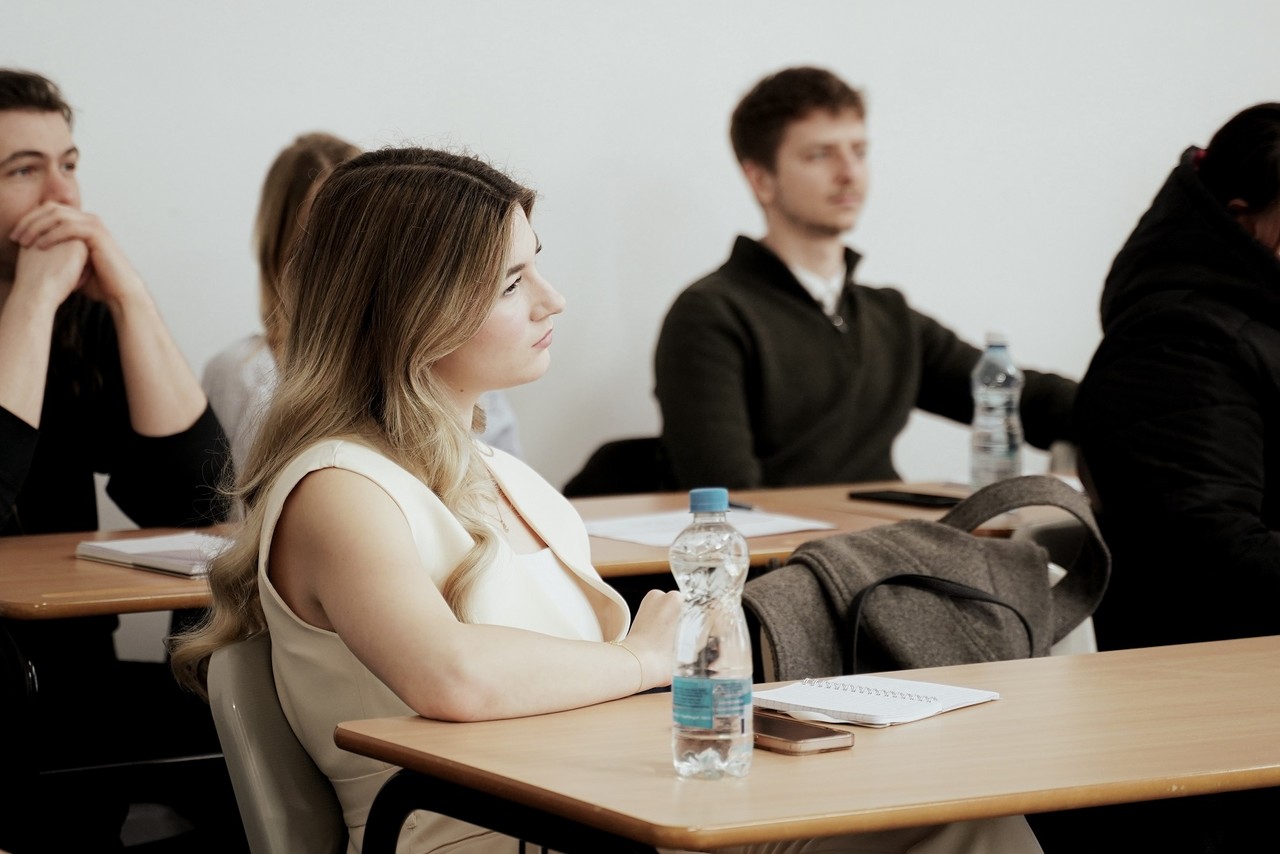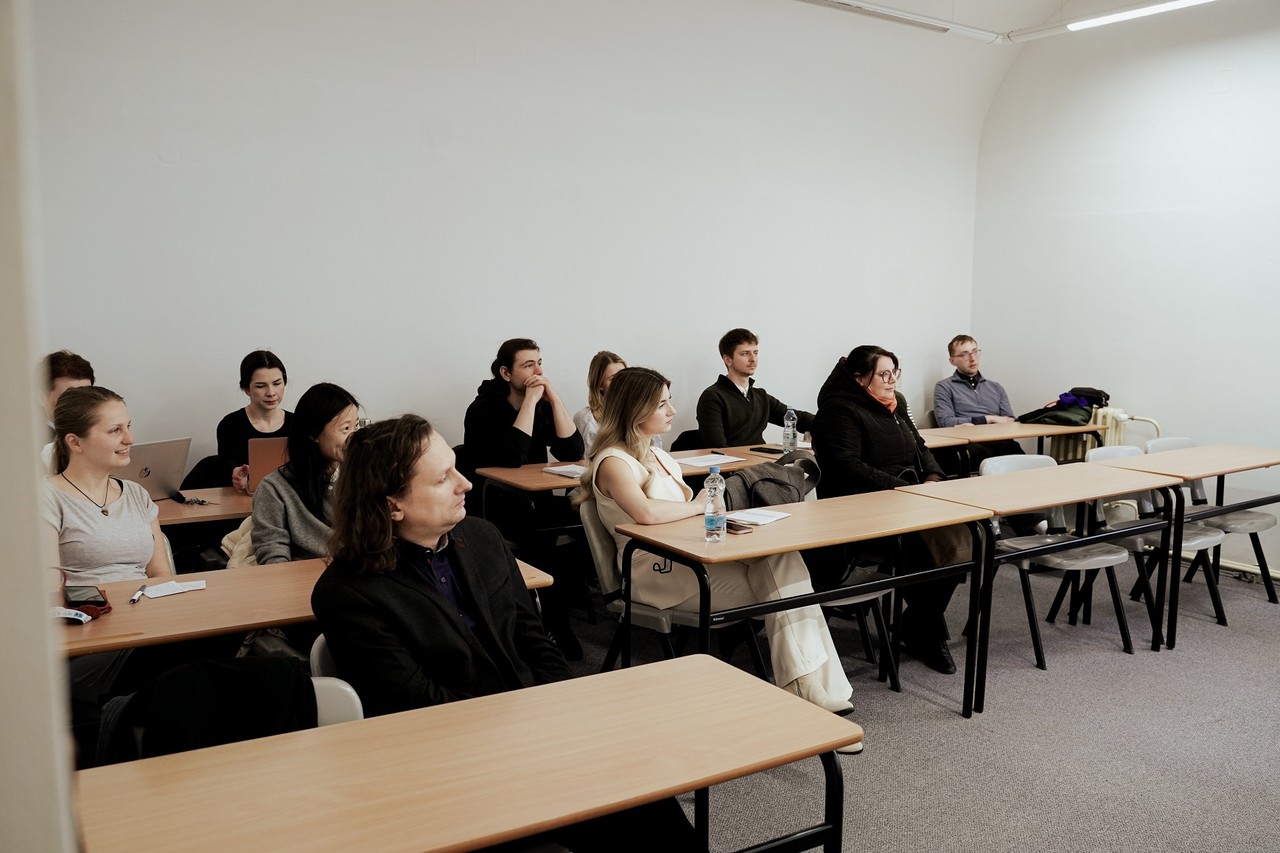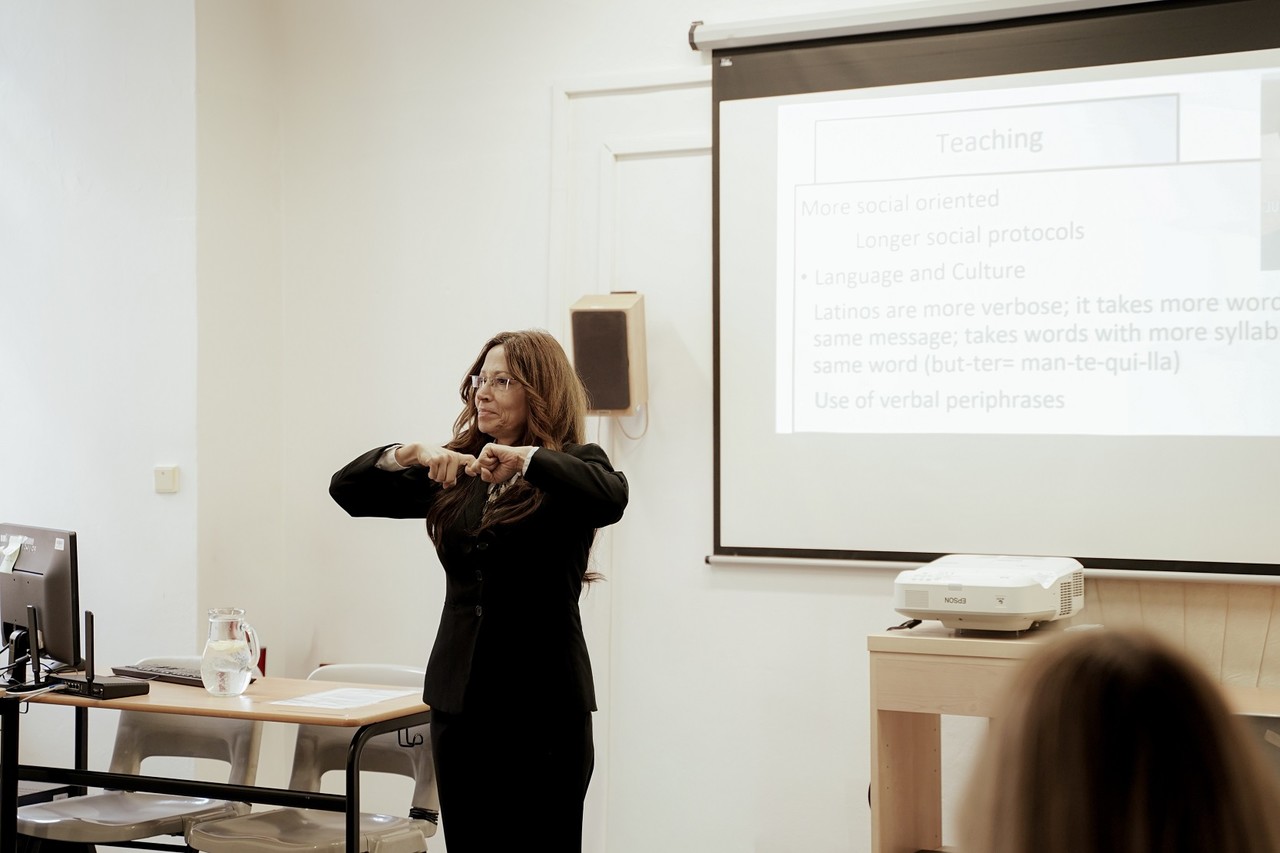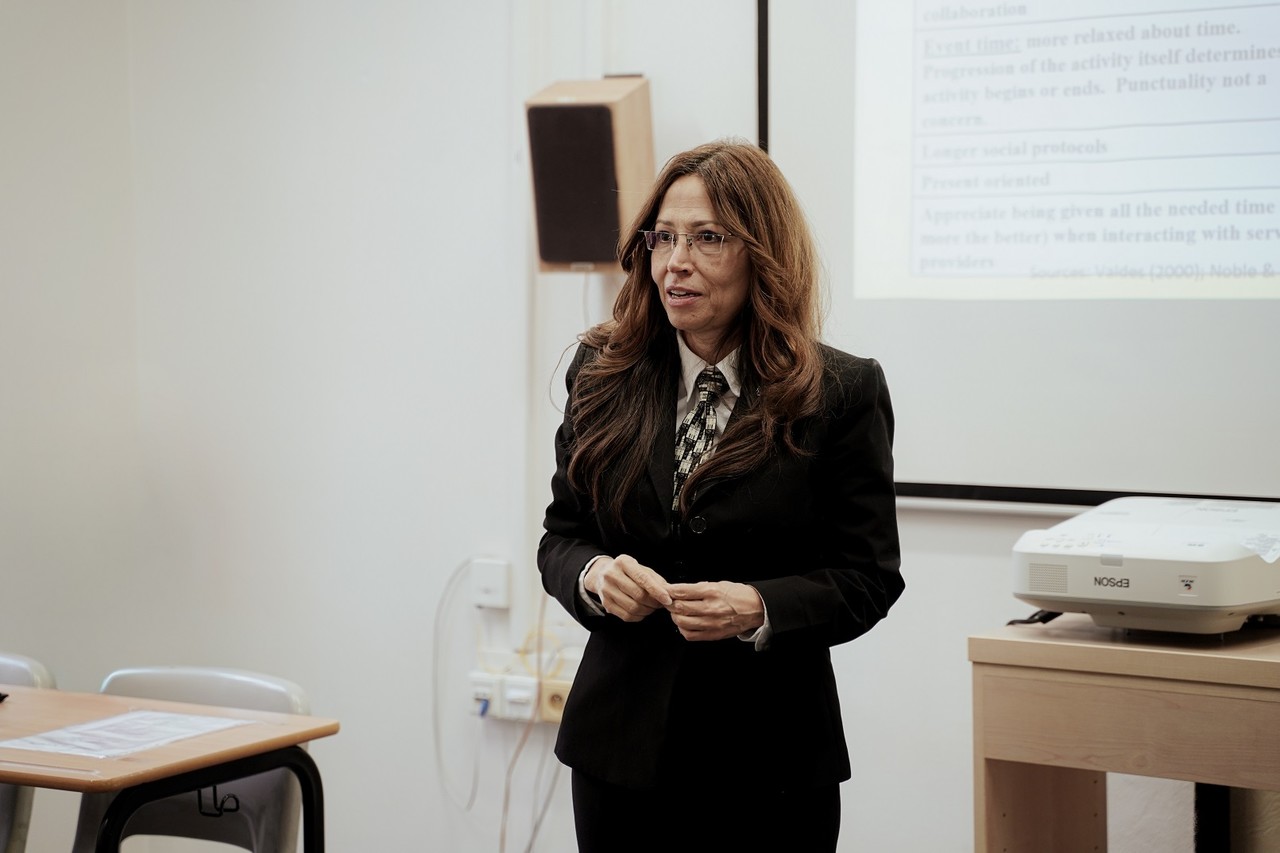
On March 31, the Faculty of Education hosted the seminar “A Woman’s Journey in Academia” as part of the Afternoons with Science series, in collaboration with the Faculty’s Office of International Relations. The event offered an inspiring insight into an academic career from both international and intercultural perspectives.
The guest speaker was Dr. Lucy M. Delgadillo from Utah State University, who is teaching at the faculty this spring semester as part of the Fulbright Scholarship Program. Those interested can also learn more about Dr. Delgadillo in a recently published interview in the Kosí rozhovory series, where she discusses her academic career, teaching experience, and her current work at the Faculty of Education at Palacký University. The interview is available in English.
In her presentation, she shared not only a personal account of her professional journey but also a deeper reflection on how cultural background shapes one’s approach to teaching, research, and the academic environment as a whole. She highlighted the differences between the collectivist cultures of Latin America, where she was born, and the individualistic environment of the United States. While cooperation, an emphasis on family and relationships, and a flexible perception of time play an important role in the Latin American context, American academic culture tends to focus more on performance, individuality, efficiency, and strict adherence to schedules.
These differences are also reflected in teaching practices. In the American environment, the emphasis is on brevity, efficiency, and clear structure, whereas the Latin American approach is more relationship-oriented, communicative, and open to longer interactions. Dr. Delgadillo emphasized that the ability to combine these approaches can be highly beneficial for both teaching and student guidance.
She also devoted a significant part of the seminar to her experience of teaching in an academic setting in a foreign language. She pointed out that the perception of an accent can influence how a teacher is evaluated and described strategies for mitigating this factor, such as providing written materials, using humour, or actively involving students in communication. She emphasized that the quality of teaching and the ability to connect with students are more important than trying to eliminate an accent, a point that resonated throughout the seminar.
In the area of mentoring, she highlighted the importance of empathy, support, and an individualized approach. She introduced the concept of “event time” versus “clock time.” In mentoring, she prefers “event time,” a flexible approach that allows her to devote as much attention to students as they actually need. Conversely, in research activities, she considers it essential to adhere to a strictly structured schedule in order to meet deadlines and publication requirements. She also addressed the challenges associated with publishing in English as a second language, including finding one’s own academic voice and responding to language-related feedback from reviewers. As a practical strategy for improvement, she recommended reading one’s text aloud, which helps to better perceive its structure and clarity.
The seminar thus opened up a range of timely topics that resonate not only with doctoral students and early-career academics but also with more experienced educators. It demonstrated that an academic career is not merely a matter of expertise, but also of the ability to navigate diverse cultural contexts, reflect on one’s own approach, and strike a balance between academic performance and the human dimension of education.
In the following discussion, Dr. Delgadillo responded to thought-provoking and often deeply reflective questions from students and faculty members, who took the opportunity to speak openly about the challenges and motivations associated with a career in research and higher education. The discussion created a space for sharing personal experiences and perspectives, where not only professional ambitions were expressed, but also the uncertainties, concerns, and joys connected to the academic environment.
Dr. Delgadillo’s internship at the faculty opens up broader opportunities for collaboration in teaching and research, and strengthens the international dimension of the academic environment.
The Fulbright Commission, which made this internship possible, has long supported educational, scientific, and cultural cooperation between the Czech Republic and the United States. The Faculty of Education has extensive experience with this programme and regularly hosts international experts who contribute to the internationalization of teaching and research.
This seminar significantly enriched the portfolio of topics in the “Afternoons with Science” series. Mgr. Lenka Nosková from the Department of International Relations played a key role in its successful organization, and we extend our sincere thanks for her contribution.